Early voting for the March 3 primary continues at a relatively brisk pace. Here are a few early data points from Vote Tracker and Voter Registration Changes.
North Carolina drops over 5,000 voter registrations, but that is no reason to panic
Every party registration dropped in the week from February 16 to 23, but some dropped more than others:
- Democrats: -2,664
- Republicans: -2,522
- Libertarians: -27
- Greens: -10
- Unaffiliated: -113
Such drops are normal during the early voting period. County election boards stop processing normal voter registration requests 25 days before an election (except for military and overseas voters), but they continue removing registrations of those who have died or moved out. In addition, it takes them some time to confirm same-day registrations.
Expect a jump in registrations after the March 3 primary. Voter registrations increased by 25,492 in the two weeks after the 2022 midterm primary.
You can explore county-level voter registration data from 2008 to today at the John Locke Foundation’s Voter Registration Changes.
2026 continues to outpace 2022, and Democrats continue to outpace Republicans
According to Vote Tracker, 331,972 ballots have been accepted through Sunday, February 22, for the March 3 primary. That compares to 248,038 ballots accepted at a similar point in 2022. The real gap is slightly higher since not all ballots through the 22nd have been processed. (The numbers in the 2026 Vote Tracker link will change a little as some counties report submitted ballots later.)
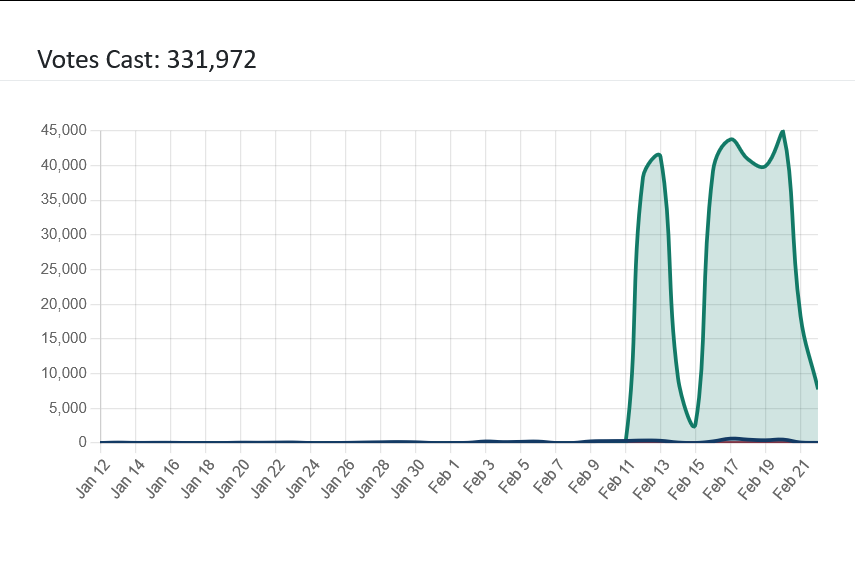
So far, 2026 has outpaced 2022 every day of early voting except for the first Sunday. The drop in the number of first Sunday votes may be due to fewer counties opening early voting sites on Sunday. There were 2,735 votes on the first Sunday of this year compared to 3,810 in the 2022 primary. That gap was more than covered on the second Sunday of early voting, with 7,801 votes this year compared to 3,647 in 2022.
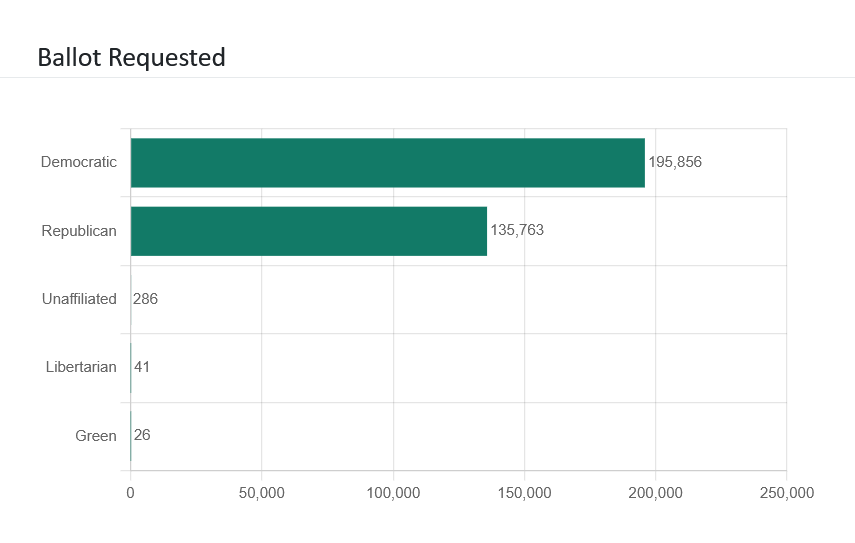
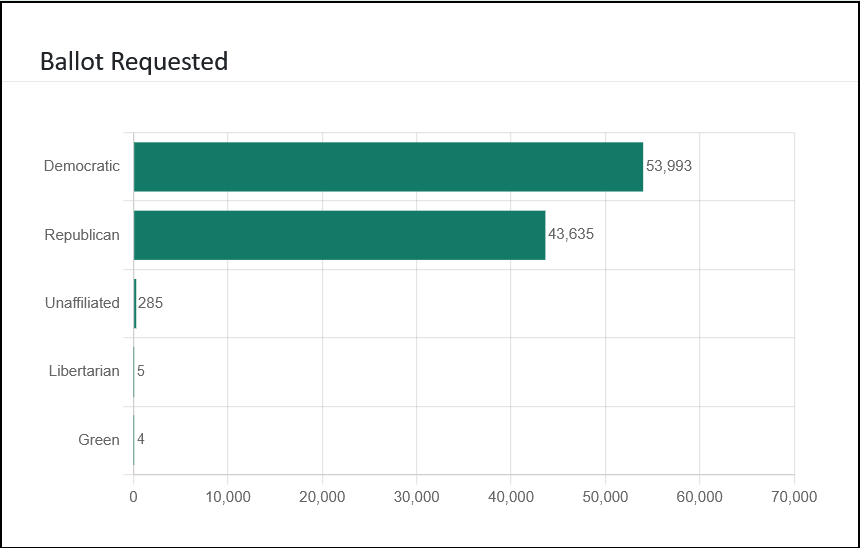
Most 2026 primary voters have requested Democratic ballots. 59% have requested Democratic ballots compared to 41% who have requested Republican ballots.
One reason for the Democrats’ higher turnout is that more registered Democrats have voted. As seen in the chart below, 4.7% of all voters who have voted so far are Democrats, compared to 29.5% for unaffiliated and 27.8% for Republicans.
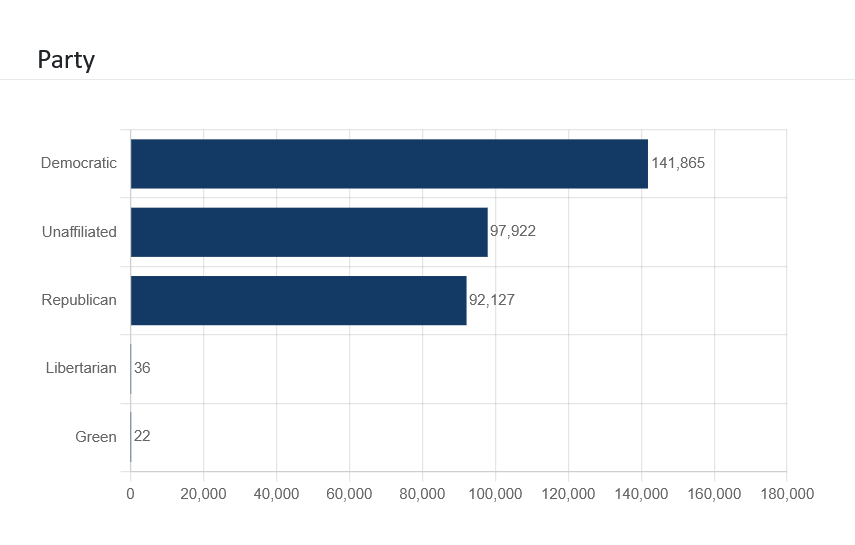
Democrats are also leading among unaffiliated voters (see chart below). Among unaffiliated voters, 55.1% have requested Democratic ballots while 44.6% have requested Republican ballots. North Carolina has a semi-closed primary system, in which unaffiliated voters may vote in any party’s primary election.
We should not read too much into the primary turnout numbers by party. The relationship between primary turnout and general election results is weak at best.
Presets: some congressional and General Assembly races to watch
Two North Carolina congressional primaries that have drawn attention:
- First District Republican primary: In a February 11 poll, no candidate had the 30 percent needed to avoid a runoff. Carteret County Sheriff Asa Buck will likely dominate in his home county (the largest in the district and do well in others because of support from sheriffs in other counties. Businesswoman and 2024 nominee Laurie Buckhout will likely pull votes from across the district, especially in the counties that were part of the district before the General Assembly altered it last year. State Senator Bobby Hanig will likely do well in his senate district, which accounts for about a third of the votes in the primary so far.
- Fourth District Democratic primary: Congresswoman Valerie Foushee is facing Durham County Commissioner Nida Allam in a repeat of a tough 2022 primary. Allam is backed by Vermont Sen. Bernie Sanders and the party’s hard left wing.
Here are just a few of the interesting primaries for General Assembly seats:
- 26th Senate District Republican Primary: President Pro Tempore Phil Berger is facing off against Rockingham County Sheriff Sam Page. The conventional wisdom is that Page will match or beat Berger in Rockingham County, but that Berger will dominate in the portion of the district in Guilford County. It has been a rough contest.
- 106th House District Democratic Primary: Incumbent Carla Cunningham has shown an independent streak, occasionally voting with Republicans to override vetoes. She is one of several incumbents the Democratic Party is seeking to purge through primary challenges. Gov. Josh Stein is backing Pastor Rodney Sadler, but another challenger is in the race, which could split the anti-Cunningham vote.