After two full weeks of voting in the 2026 election, absentee voting continues to be off the 2022 pace. Perhaps a bigger story at this point is that Republican registrations have fallen so far behind the pace we should expect ahead of the November 3 election that Democrats might reemerge as North Carolina’s largest party before election day.
Absentee voting is depressed, but that is not depressing
As seen on Vote Tracker, after North Carolina’s second full week of absentee voting, a familiar pattern is emerging. County boards of elections have accepted 5,540 as of September 20. 3,840 of those were accepted between September 13 and 20.
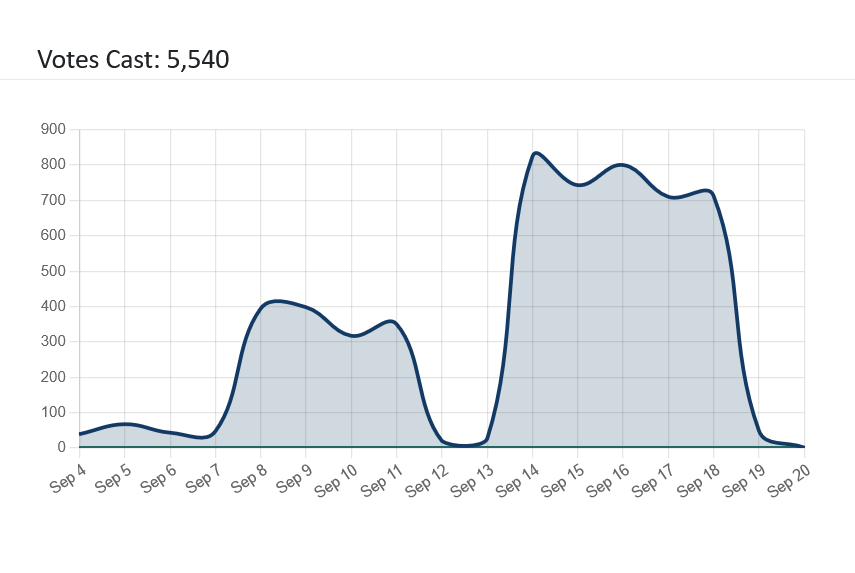
We will likely see that pattern through election day. As seen in the graphic below on absentee voting in the 2022 election, the number of accepted ballots increases each week leading up to Election Day.
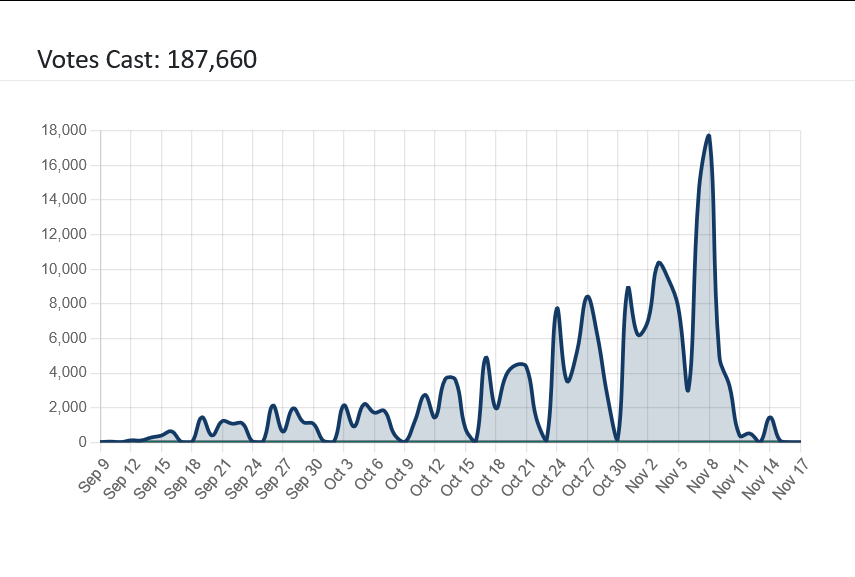
The 5,540 ballots accepted through September 20 are off the pace of the 6,944 accepted at a similar point in 2022. The partisan breakdown of the accepted ballots is 40.7 percent Democrats, 37.0 percent unaffiliated, and 13.0 percent Republicans.
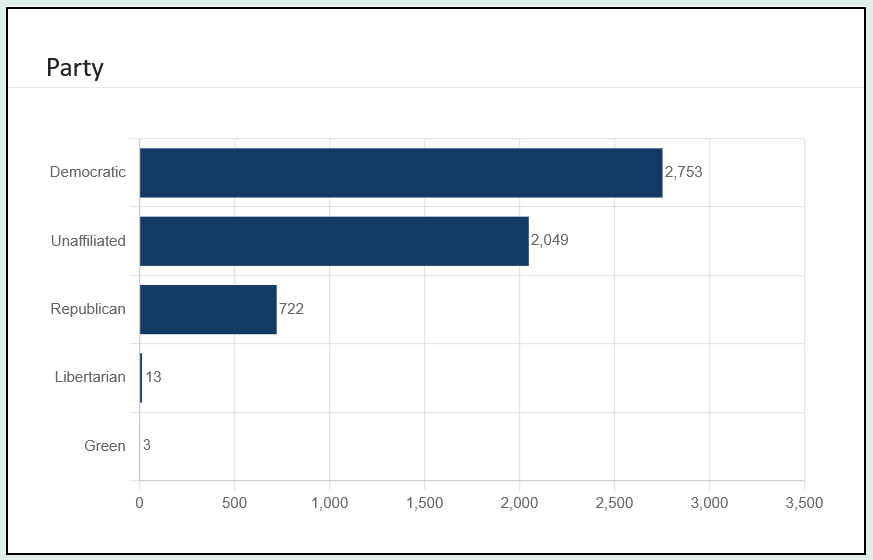
Both parties are down from their 2022 proportion of 54.2 percent Democratic and 14.8 percent Republican. The proportion of unaffiliated increased from 30.7 percent in 2022.
Democratic absentee ballot requests lag 2022
The decline in absentee voting from 2022 to 2026 shows no sign of abating. As seen in the graphic below from the North Carolina State Board of Elections, the 77,156 ballots requested through 43 days until election day are well below 109,848 requests at a similar point in 2022. That drop could be a sign of voters gradually returning to voting in person after the 2020 jump in absentee voting over COVID fears.
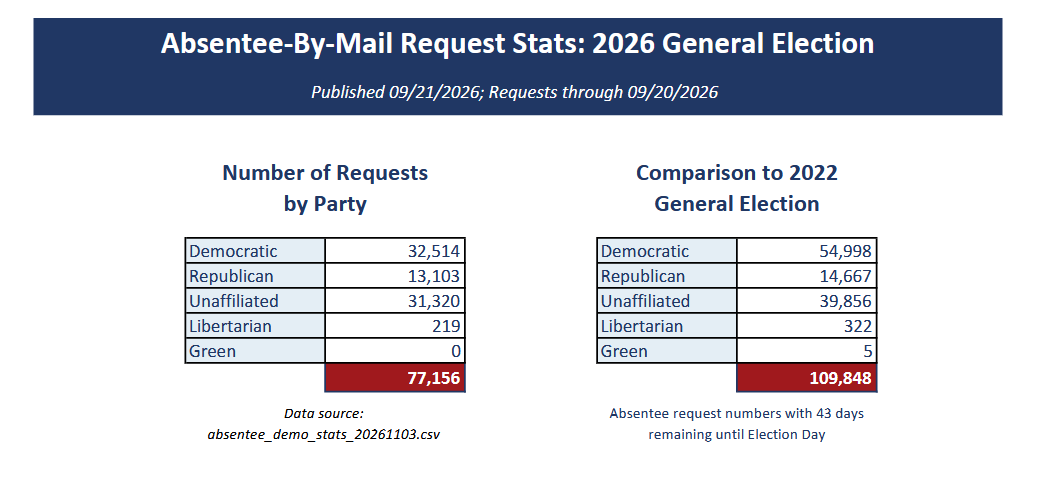
The Democratic share of absentee ballot requests has dropped by 8 percentage points, from 50.1 percent in 2022 to 42.1 percent in 2026. Again, however, that is likely due to a move away from absentee voting this year.
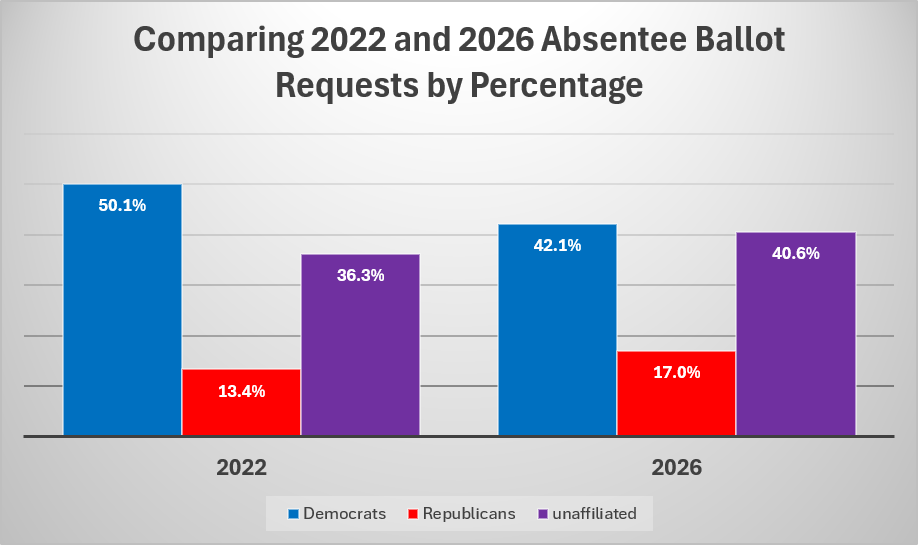
Democrats were 44.2 percent of all absentee voters (not absentee ballot requesters) in 2022 and 41.3 percent in 2018.
Republicans registrations lag
Looking at voter registration starting 15 weeks before election day, Republicans lag well behind where they were in the last Trump midterm election in 2018. Democrats are also behind where they were at a similar point in 2018, but have surged in registrations this week to decrease that gap.
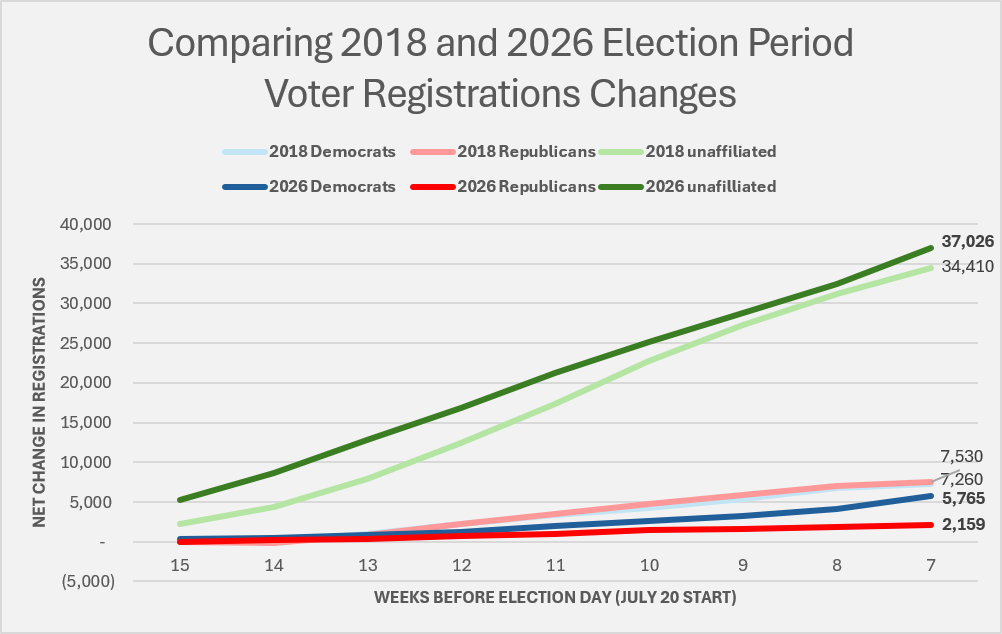
Democrats outgained Republicans by 1,341 registrations in the week of September 18 and are on pace to outnumber Republicans in North Carolina in late October. It was only last January that Republicans overtook Democrats to become North Carolina to become North Carolina’s largest party for the first time in state history. Unaffiliated has been the state’s largest registration since early 2022.
A potential source of solace for Republicans is that the relationship between relative voter registration gains between the two parties and total vote share is weak to the point of insignificance, as seen in the chart below (and I mean really insignificant: F(1, 55) = 0.15, p = .701, R² = .0027).
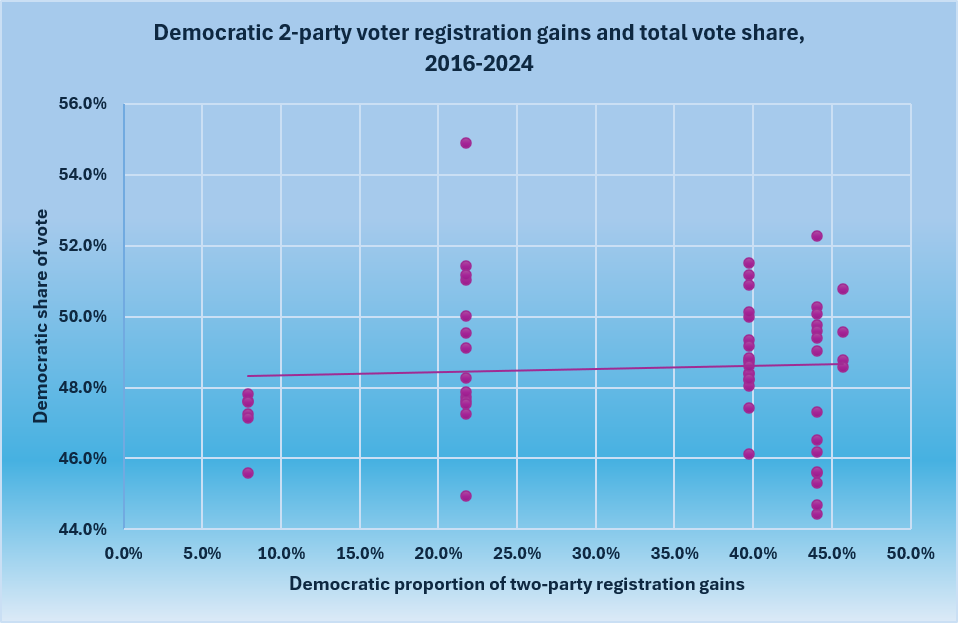
The data in the chart is based on the Democratic share of two-party voter registration gains in each election year from January through election day in elections from 2016 through 2024, and the Democratic share of the total vote in Council of State and statewide judicial races in those elections. Switching to the Democratic share of all voter registration gains, rather than two-party gains, made little difference.
Of course, there are many factors that go into election results, and the actual registrations gained ahead of an election are usually a small proportion of the total votes. One exception was in the first ten months of 2008, when Democrats had a net gain of 338,553 registrations compared to 74,919 for Republicans. In any case, party leaders would rather gain more registrations than fewer.