The 2026 election was a blue wave (tsunami, earthquake, fill in your metaphor here). It produced some exceptionally close elections, however. County boards of election conducted canvasses on the morning of November 13, which will lead to the State Board of Elections (SBE) certifying most election results as official.
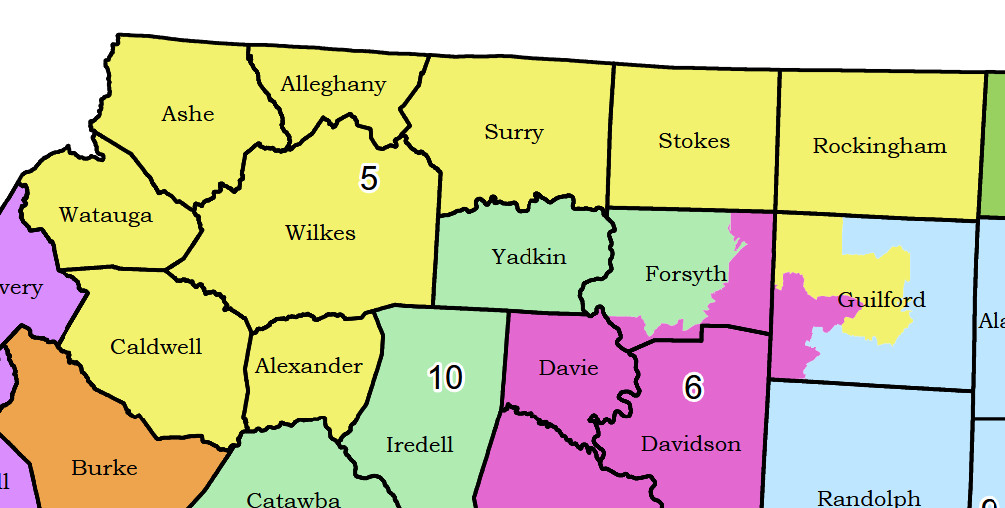
Some races, however, could be heading to recounts. They include the Fifth Congressional District race in which Democratic challenger Chuck Hubbard leads incumbent Republican Virginia Foxx by a mere 337 votes out of nearly 287,000 ballots cast.
So, how does the recount process work? There are three steps. They are briefly described below, with the potential recount in the Hubbard-Foxx race used as an example.
Step one: machine recount
Under state law (GS 163‑182.7.(c)), a losing candidate may demand a recount if the gap in the race is not more than 1/2 of one percent for statewide races and not more than one percent for nonstatewide races. The gap in the Hubbard-Foxx race is 0.12 percent, well within the one percent cutoff. The Foxx campaign must file the demand with the SBE within two business days of the canvass.
The SBE will notify the county boards, which must conduct retabulations (machine recounts) of all ballots within three days of receiving the notice. They will retabulate all ballots (absentee, early, election day, and provisional) at the county board’s office or another location. The recount is public, and the county board must issue a public notice of the recount at least 48 hours before they begin.
Each tabulator will be attended by two-person bipartisan teams or by trained elections staff supervised by bipartisan teams. The overall effort must be overseen by at least two board members, one from each party.
The county board has five days from the start of the recount to complete it. Most will finish much sooner. The results of the retabulation are the new official count.
Step two: sample hand-eye recount
Whichever candidate loses the machine recount may demand “a second recount on a hand‑to‑eye basis in a sample of precincts” (GS 163‑182.7A(a)) within 24 hours of the completion of that recount.
Each county will conduct a “hand-to-eye recount of all ballots cast in 3% of in-person voting sites in each county in the jurisdiction of the contest,” rounded up, in accordance with state law. For example, Watauga County had 20 precincts and six early voting sites in the election. Three percent of 26 is 0.78, which rounds up to one. If, for example, they randomly selected the Deep Gap Fire Department early voting site, they would have to count 2,221 ballots by hand.
As with the tabulation recount, this recount would be open to public observation and conducted by bipartisan teams under the direction of the county board of elections.
If the recount suggests that the election result could be reversed if extrapolated across the entire tabulation, the counties in the district would have to conduct a full hand-to-eye recount of all ballots. If 10,000 ballots were involved in the Hubbard-Foxx hand-to-eye recount, then a shift of 12 votes toward Foxx would trigger a full hand-to-eye recount (10,000 * 0.0012).
The county has five days to complete the sample recount once it has started.
Step three (if needed): Full hand-to-eye recount
The rules for conducting the full hand-to-eye recount are exactly the same as for the sample recount, other than the number of ballots involved.
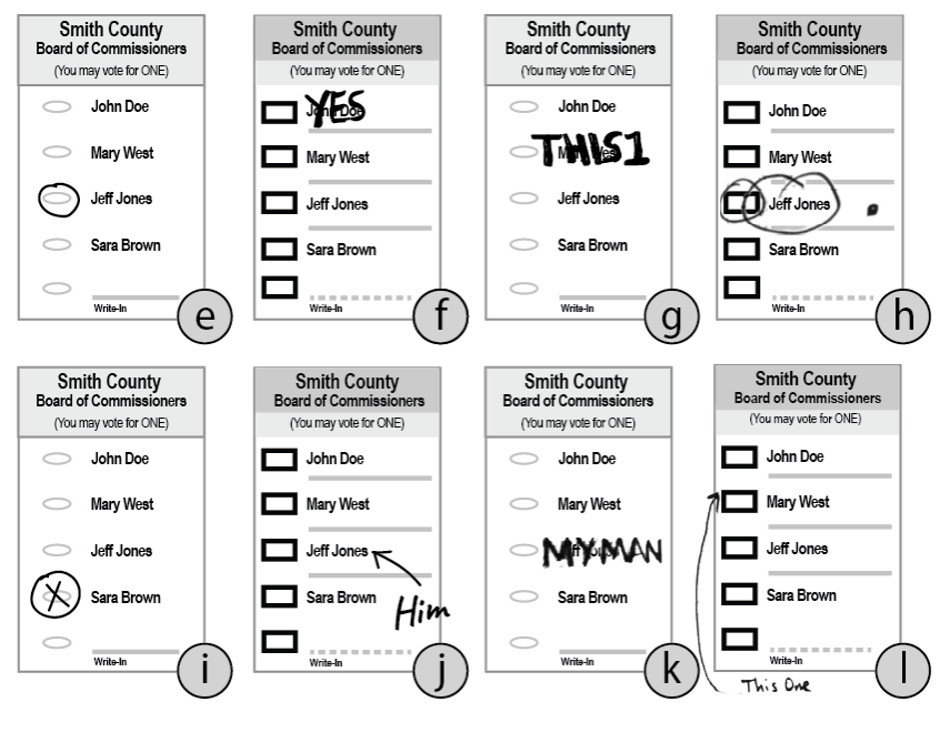
Some votes not counted by tabulation might be counted in hand-to-eye recounts if the voters’ intentions are clear. Here are some examples in the State Board of Elections’ guidance on ballot marks that were not tabulated but should be counted:
If there is a discrepancy between the machine recount and the full hand-to-eye recount, the hand-to-eye recount results are considered official, except under limited circumstances (such as ballots being lost or destroyed during the hand-to-eye recount).
For more, you can read a highly detailed memo from the SBE to county boards on conducting recounts.